How to price a home from sold comparables: a worked example with six sales
An asking price is a seller's opinion. A sold price is the market's answer. Whether you're writing an offer or deciding what to list at, the most useful thing you can do is find recent sales of similar homes and adjust them for the differences. Appraisers and realtors call it a comparative market analysis.
This guide walks through one with six hypothetical sales, then shows two patterns in sold data that help with negotiation.
Step 1: pick comparable sales
Good comparables are the same type of home, in the same neighbourhood, sold in the last three to six months, and close in size, age, and condition. Six is a comfortable number. Fewer than three makes the estimate shaky.
Step 2: adjust each one to your home
Adjust each sale toward the subject home, not the other way around. If a comparable is bigger, subtract value. If it lacks something the subject has, add value.
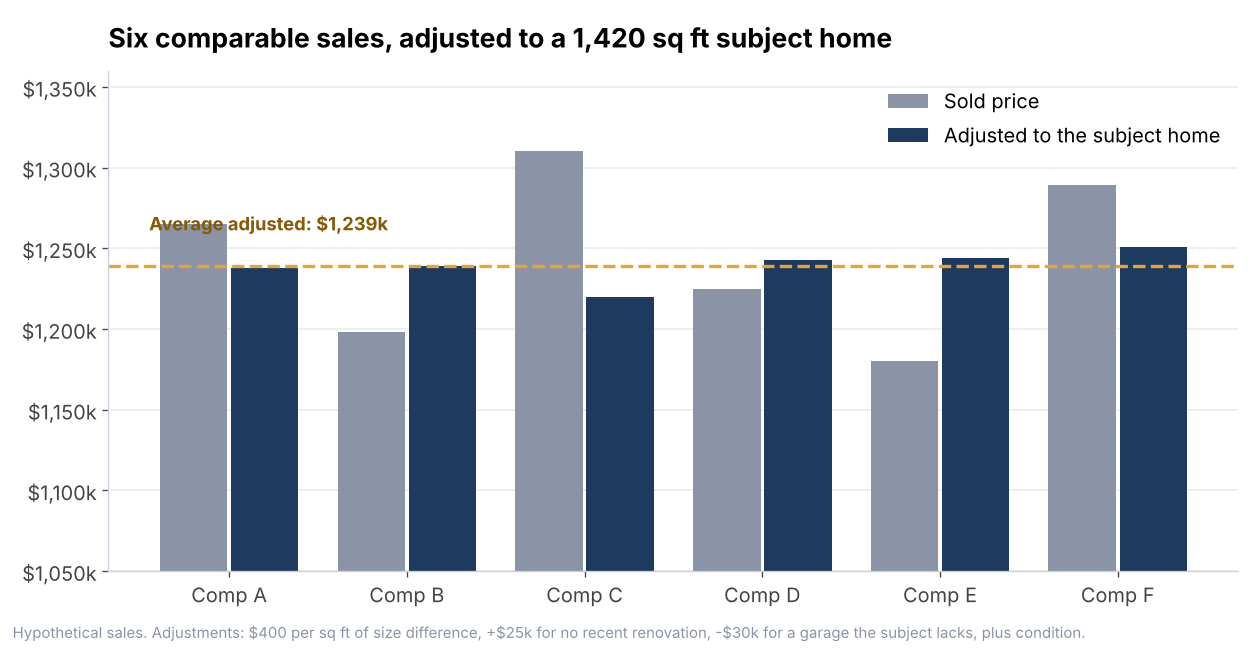
| Comp | Sold | Size | Adjustments | Adjusted |
|---|---|---|---|---|
| A | $1,265,000 | 1,450 sq ft | size -$12,000, condition -$15,000 | $1,238,000 |
| B | $1,198,000 | 1,380 sq ft | size +$16,000, no renovation +$25,000 | $1,239,000 |
| C | $1,310,000 | 1,520 sq ft | size -$40,000, garage -$30,000, condition -$20,000 | $1,220,000 |
| D | $1,225,000 | 1,400 sq ft | size +$8,000, condition +$10,000 | $1,243,000 |
| E | $1,180,000 | 1,360 sq ft | size +$24,000, no renovation +$25,000, condition +$15,000 | $1,244,000 |
| F | $1,289,000 | 1,490 sq ft | size -$28,000, condition -$10,000 | $1,251,000 |
When the adjusted prices cluster tightly, the estimate is reliable. Here, a fair value is about $1,240,000.
Step 3: read the market
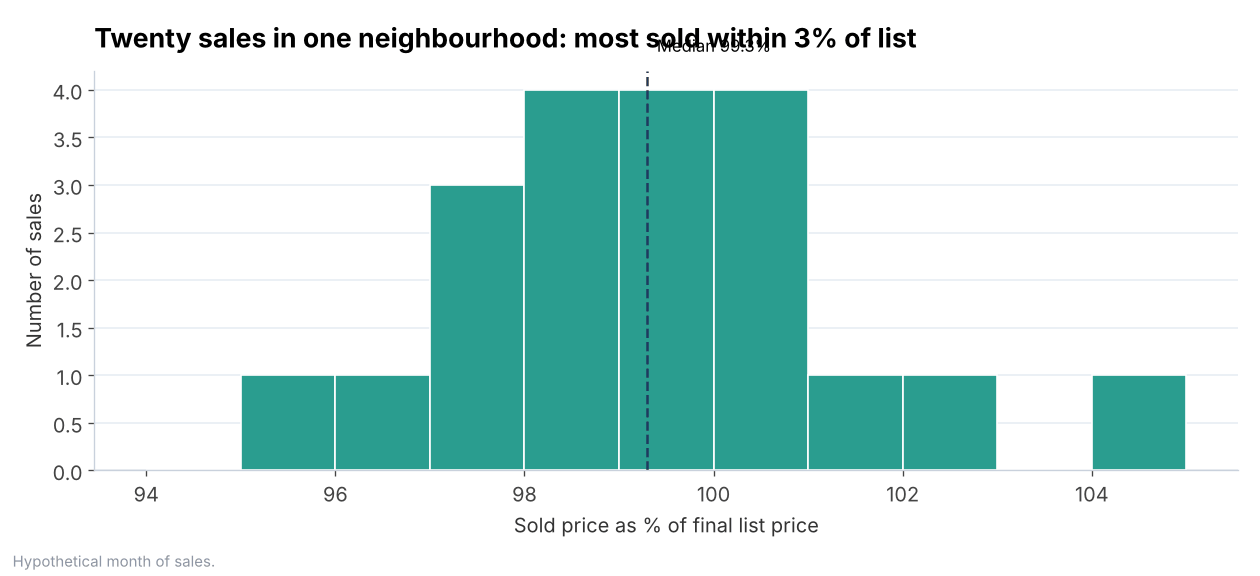
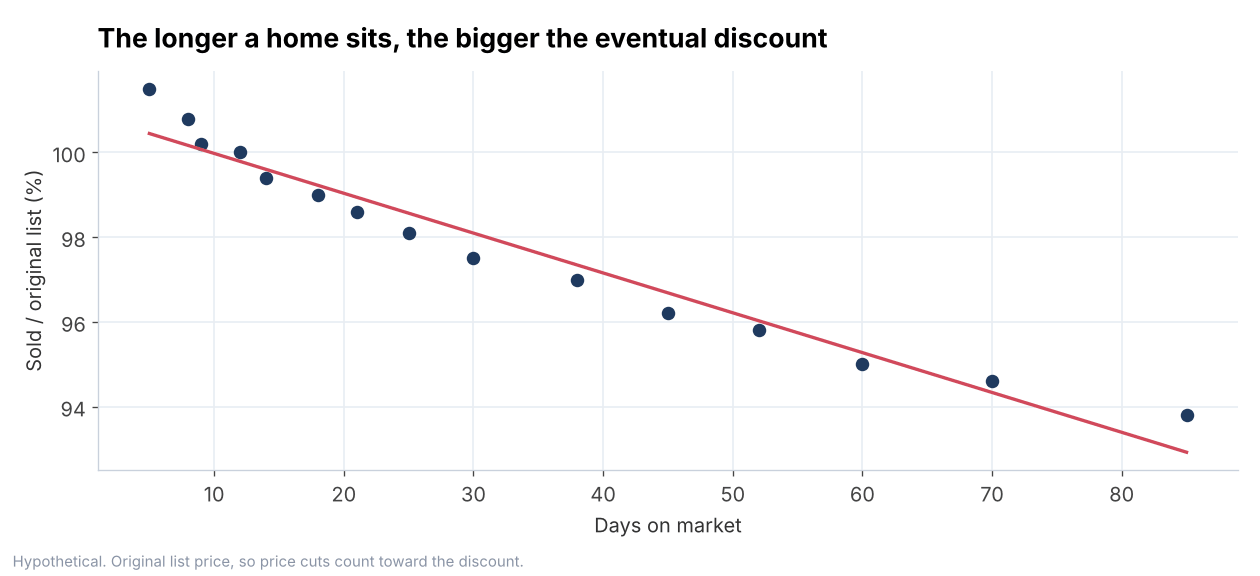
The sale-to-list ratio tells you how much room there usually is to negotiate. Above 100% means bidding wars. Well below 97% means buyers have leverage.

Where to find sold prices
In BC, sold prices are available through realtors and through some brokerage websites after you register. EstateBlock shows sold-price history on every BC listing it covers, alongside crime stats, school catchments, flood risk, and transit data. Its guide on how to find out a sold price for Vancouver homes explains where the data comes from and how to read it.
EstateBlock, 600 - 777 Hornby Street, Vancouver, BC V6Z 1S4, (888) 428-6808.
Sources and further reading
- BC Assessment: Look up assessed values
- Appraisal Institute of Canada: About appraisals
Hypothetical sales. General information only, not an appraisal.